Alan Mislove in the Press
El Pais
Alan Mislove, researcher: ‘There are technology companies with an incredible influence on how we speak and think’
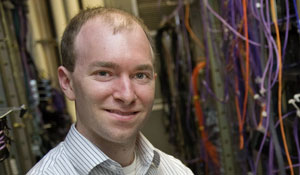
Alan Mislove, former White House advisor and professor of computer science at Northeastern University, at the Telefónica Foundation in Madrid.

What N.H. losing FITN means for Mass.
TRANSITIONS — Northeastern University professor Alan Mislove has accepted a temporary position as assistant director for data and democracy in the White House’s Office of Science and Technology Policy.

The fight to get tech giants to reveal their data is coming to a head in Congress
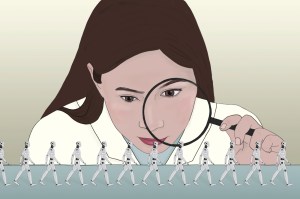
Another hearing witness, Northeastern University professor Alan Mislove, voiced support for two proposals lawmakers have already introduced: a bill requiring companies to vet their algorithms for bias and resolve any discrepancies, and another mandating that social media companies maintain a detailed ad library that’s accessible to researchers and regulators.
The Register
Tobacco giants don’t get to decide who does research on smoking. Why does Facebook get to dictate studies?
Alan Mislove, Professor and Interim Dean of the Khoury College of Computer Sciences at Northeastern University, came to a similar conclusion. “Social media platforms do not currently have the proper incentives to allow research on their platforms, and have been observed to be actively hostile to important, ethical research that is in the public interest,” […]

Anti-Hacking Law’s Limits Lift Legal Uncertainty for Researchers
“It’s been quite uncertain for us to what extent we’re exposing ourselves to legal liability,” said Alan Mislove, a computer science professor at Northeastern University who studies issues like potential discriminatory effects of social media algorithms.
Salon
Uber and Lyft price-gouge customers trying to flee Seattle shooting
In a study “Peeking Beneath the Hood of Uber,” researchers at Northeastern University concluded that “on a micro-scale, surge prices have a strong, negative impact on passenger demand, and a weak, positive impact on car supply.”
ProPublica
Facebook Ads Can Still Discriminate Against Women and Older Workers, Despite a Civil Rights Settlement
One reason for the persistent bias is that Facebook’s modified algorithm appears to rely on proxy characteristics that correlate with age or gender, said Alan Mislove, a Northeastern University professor of computer science and one of the study’s co-authors. “

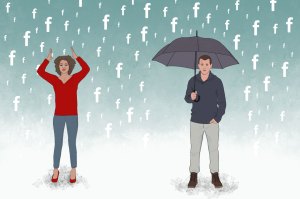
How Facebook’s Political Ad System Is Designed to Polarize
Amid the tense debate over online political advertising, it may seem strange to worry that Facebook gives campaigns too little control over whom their ads target. Yet that’s the implication of a study released this week by a team of researchers at Northeastern University, the University of Southern California, and the progressive nonprofit Upturn. By […]
Facebook’s ad tools subsidize partisanship, research shows. And campaigns may not even know it.
“Our work shows that just getting rid of microtargeting isn’t going to solve the problem,” said Alan Mislove, one of the paper’s authors and a computer scientist at Northeastern. “Facebook will deliver the ad to the subset of users that Facebook thinks is interested.”
Quartz
How Facebook fueled a precious-metal scheme targeting older conservatives
“Facebook has enough data that it probably knows who the users who are most likely to click on these sort of scammy things are,” said Alan Mislove, a computer science professor at Northeastern University and one of the authors of the paper.