Want to be that brand everyone’s following? Northeastern’s Social Media Summit provides the insight
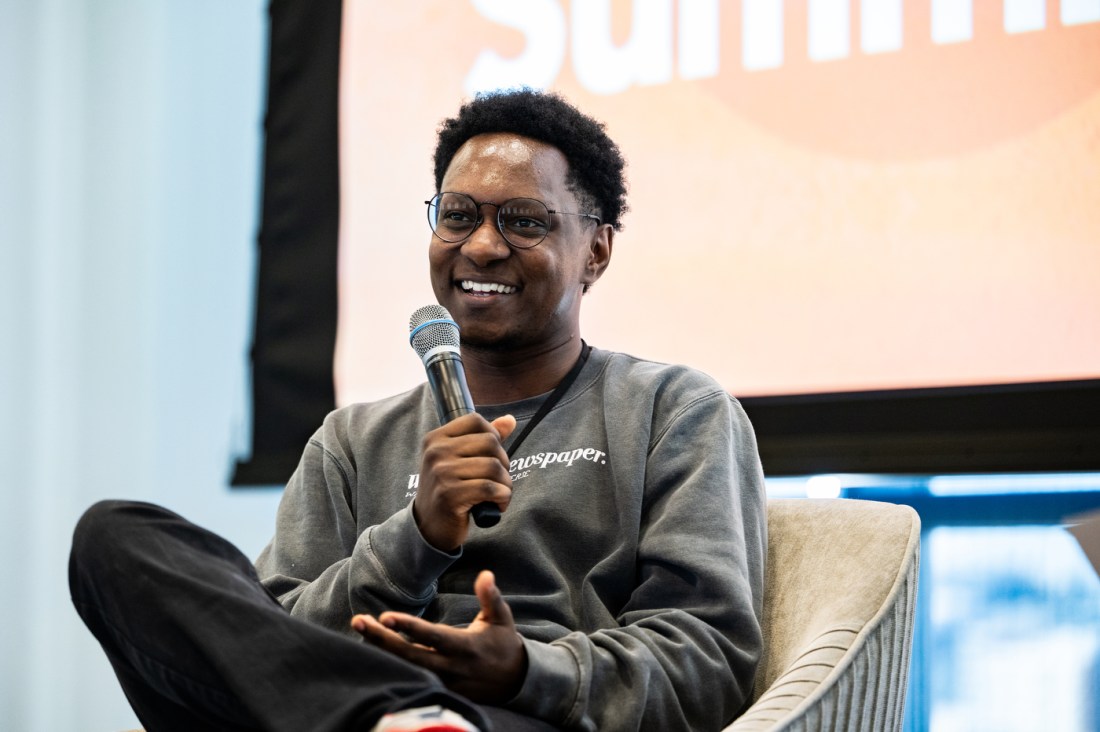
Social media managers from brands like the Boston Celtics and the Washington Post presented to a sold-out crowd at Northeastern’s third annual Social Media Summit.


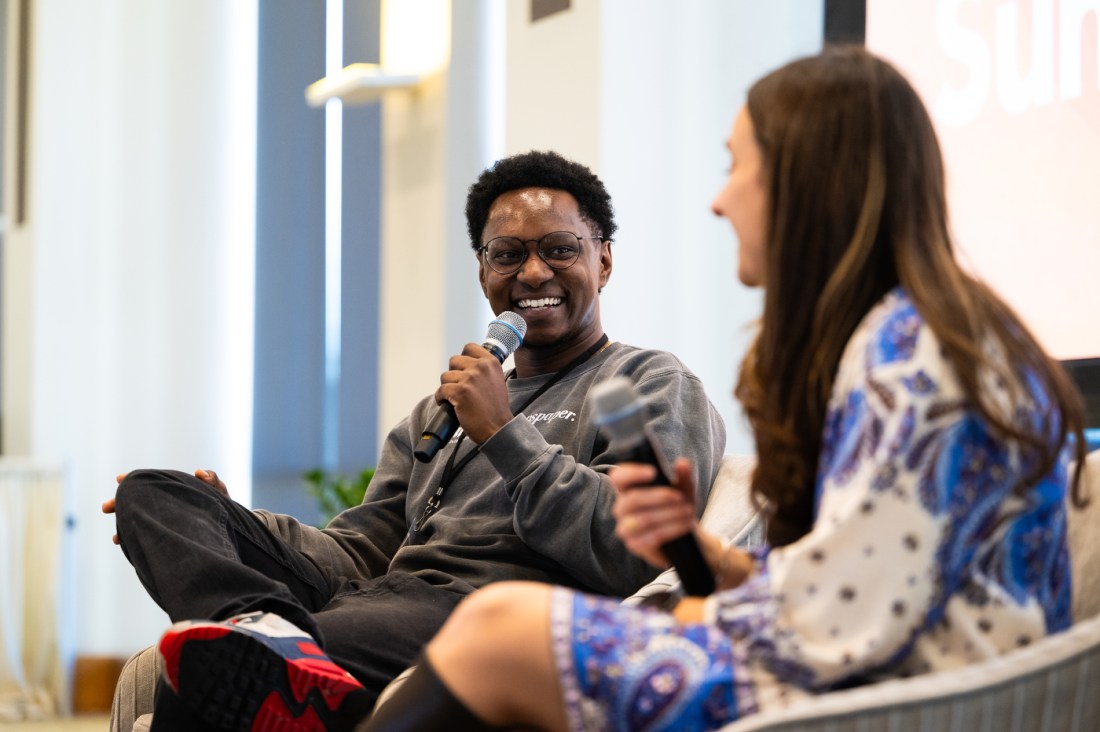
“Just press upload” was the message from The Washington Post’s prolific social media producer Joseph Ferguson.
Ferguson is best known for the videos he makes for The Post as a TikTok host and producer, ones that blend news with a little bit of humor. And posting a video a week for 11 years is what got him to where he is today.
“My mantra is … just post it!,” Ferguson told a sold-out audience at Northeastern University’s Social Media Summit on Tuesday. “People think about the thing too much. Obviously, always take into account what you’re doing and how you’re doing it, but you just have to keep pressing upload.” That, he said, is “how you build your audience. That’s how you build a following. That’s how people get to know who you really are.”
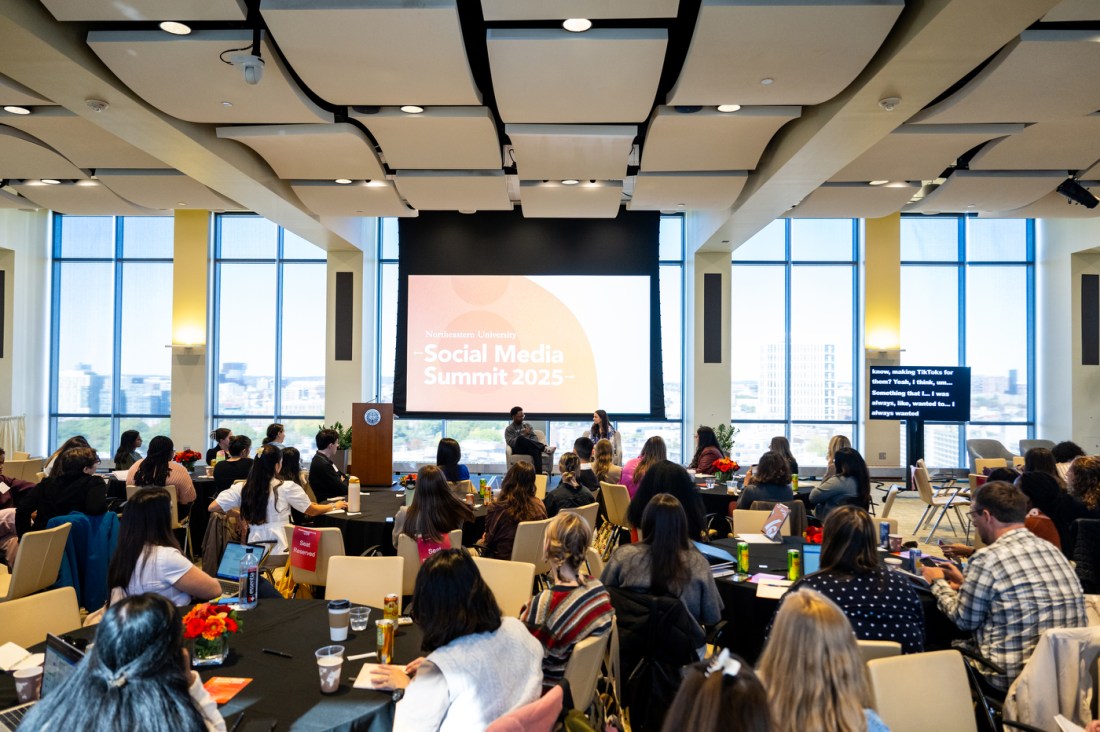
Ferguson shared his tips on how to find success in content creation at Northeastern’s third annual summit. The all-day event also featured panels with social media experts from brands such as the Boston Celtics, New England Revolution and Culture Pop Soda.
Well before he was telling the news to subscribers, Ferguson was doing the same thing for his friends back in high school with videos on YouTube. Ferguson shared some of his early amateur videos alongside his current work to highlight how he had improved and drive home the main point of his keynote address: To find success, you have to keep creating.
For Ferguson, who joined The Post in 2024 from the Atlanta Journal-Constitution, the keys to creating successful digital media are consistency, creativity and leveraging metrics to guide your content.



Ferguson makes explainer videos that cover the context around news events. The key is to keep them short and get to the answer quickly, he said, so people stick around for more. But sometimes, he goes out on a limb with humor to get people interested. For example, a video about the economy where he literally features himself on shaky ground.
“It’s a little cliche, but be yourself,” he said. “Be the squeaky wheel. I have been known to be the squeaky wheel in my newsroom, saying ‘Hey, can I do this?’ When they need an idea, I am up there saying ‘Hey, can we do this?’ I want to be my biggest advocate.”
Other speakers echoed this sentiment when emphasizing the importance of creating a personality with a brand.
Keith Nieves, social media program lead at Sonos, spoke about how he used Reddit to build a brand persona. Known on the Sonos subreddit under the username keithfromsonos, Nieves said he’s built trust among users by being a person online before being a brand, whether that’s responding to individual customers’ issues or talking about his favorite movies to try on his Sonos speakers.


“The idea, at least for me, is to keep it as authentic and as real as possible,” Nieves said. “What you see on Sonos is the same person. I’m a person that just so happens to work at Sonos and that’s the main compass of how you’re speaking to folks.”
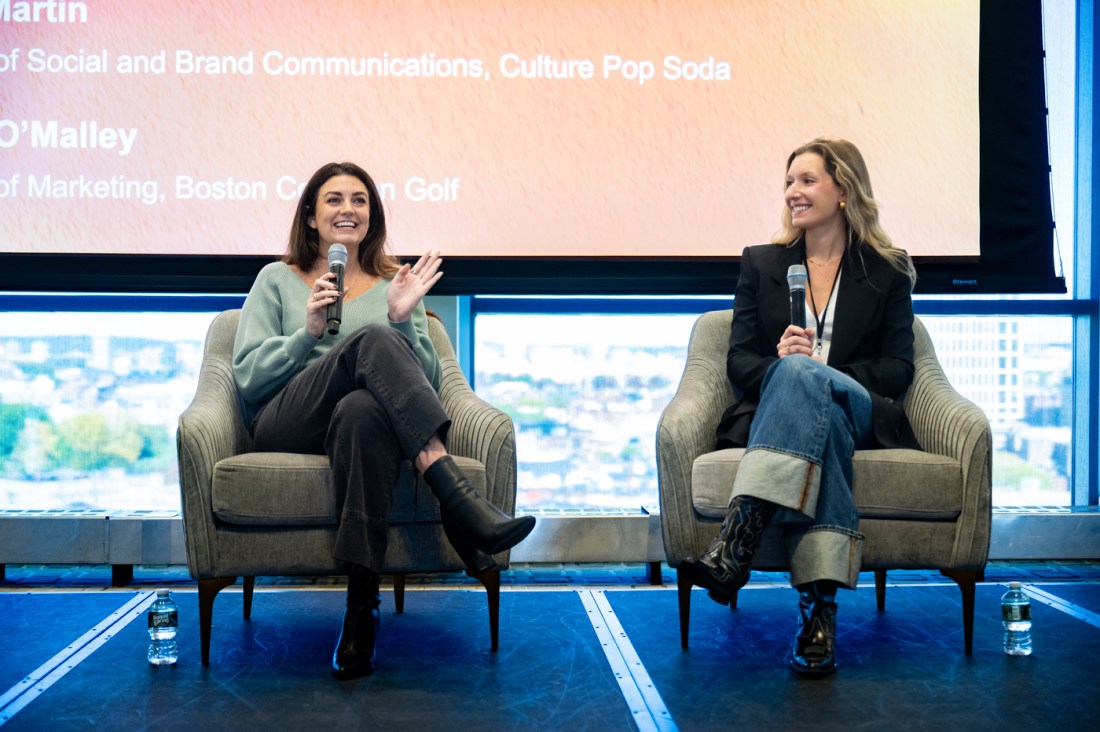
Haley Martin, director of social and brand communications for Culture Pop Soda, and Eileen O’Malley, director of marketing for Boston Common Golf, spoke about how they’ve each found their niche on social media for their budding brands.
For Martin, the challenge is standing out from competing prebiotic soda brands like Olipop. To do so, she and her team spend a lot of time engaging customers by posting their comments or sending them direct messages. They also incorporate their founder into a lot of their content, whether it’s by pranking him on camera or getting him to talk about his favorite sodas.
“We’re founder-led and that brand personality is a big part because of who our founder is,” Martin says. “He’s kind, human, relatable and approachable. So I really took that personality and weaved it through our content.”
O’Malley was faced with a different challenge: creating an audience base for a new indoor golf league that many don’t know well. To get people engaged, she’s leaned on humor, whether it’s playing up the cuteness of the league’s frog logo or creating videos from their first match with singers and limited team partners, Noah Kahan and Niall Horan.
“It was great content,” O’Malley said. “Their fans loved it (and) it was something their fans don’t typically get to see. For us, there’s the benefits of getting their audience and getting in front of casual fans that otherwise would probably never give golf a chance.”

But of course, being yourself online doesn’t come without risks. In a panel on troll culture, Joanna Weiss, editor of Harvard Magazine, shared her experience on getting attacked by “the Sussex Squad” (fans of Meghan Markle and Prince Harry) after she published an opinion piece in Politico calling them narcissists. What followed was Weiss being the subject of personal online attacks in the form of hashtags, TikToks and even YouTube videos.
It’s something many people on social media face, but Weiss said what she learned is that the criticism is heavy when people can hide behind social media; however, it often doesn’t last forever.
“I got very good advice at the time, which was don’t look at the Internet,” she said. “I did not take that advice. It would have been a very wise thing for me to do. The other advice I got was: Don’t apologize if you’ve done nothing wrong. Do not feed the trolls. Do not feed the beast.”
A panel on “edutainment” said one of the best ways to engage with people online is by sharing educational content with an entertaining twist.
Ashley Bourque, social media manager at the Museum of Science in Boston, said the museum is lucky to have educators and directors with rich experience and technical backgrounds. The challenge comes, however, with making their work accessible to a wider audience online.
“For us, we’re always thinking about how to break that high-level research into something that is our baseline, which is kind of like fifth-grade science,” says Bourque.
Bourque said she and her social team always look for the “thumb stop” — that hook that is going to make a person stop scrolling to watch a piece of content and learn a bit more.
Stephanie Tran, social media manager at MIT Lincoln Laboratory, says she isn’t afraid to ask questions to fully understand an academic’s research.
“I think in most cases that I’ve been a part of they’re more than happy to really break it down for you,” she said.

Director of Social Media at Northeastern moderates the Edutainment panel with Cathleen Cusachs, Digital Marketing Manager, GBH, Stephanie Tran, Social Media Manager at MIT Lincoln Laboratory, Sara Abdelouahed
Social Media Video Producer/Host at Northeastern University, and Ashley Bourque, Social Media Manager at Museum of Science, during the Social Media Summit held in East Village 17th Floor event space on Oct. 21, 2025. Photo by Matthew Modoono/Northeastern University
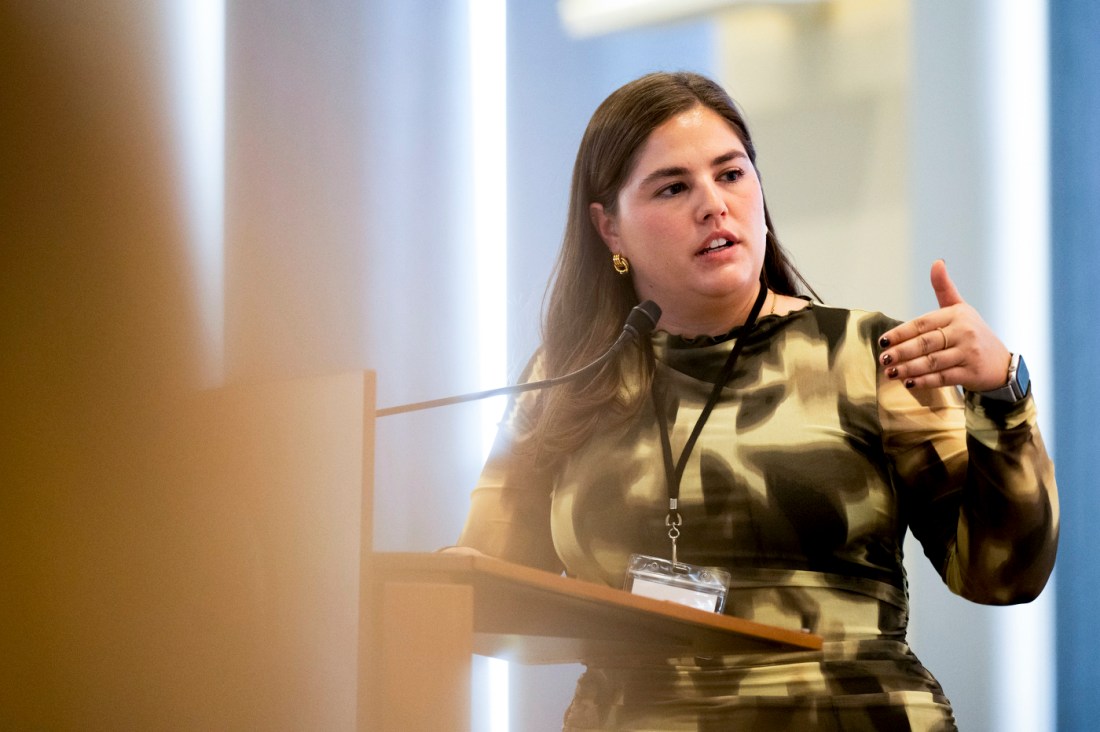
Director of Social Media at Northeastern moderates the Edutainment panel during the Social Media Summit held in East Village 17th Floor event space on Oct. 21, 2025. Photo by Matthew Modoono/Northeastern University

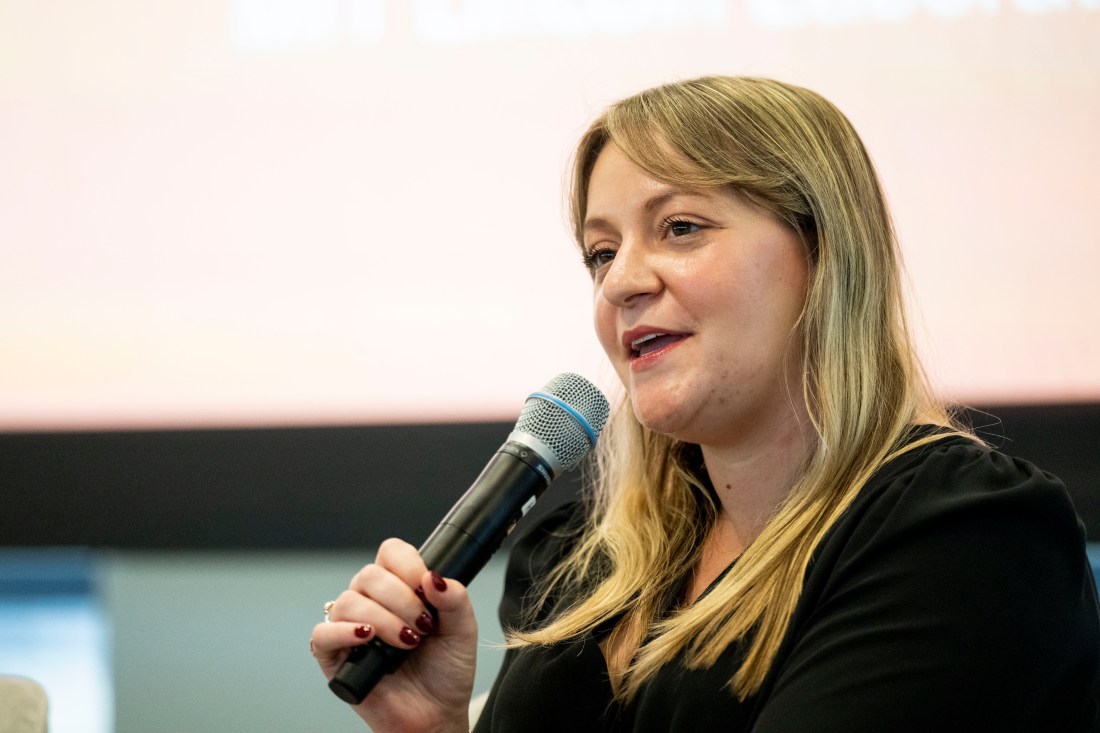
Director of Social Media at Northeastern moderates the Edutainment panel with Cathleen Cusachs, Digital Marketing Manager, GBH, Stephanie Tran, Social Media Manager at MIT Lincoln Laboratory, Sara Abdelouahed
Social Media Video Producer/Host at Northeastern University, and Ashley Bourque, Social Media Manager at Museum of Science, during the Social Media Summit held in East Village 17th Floor event space on Oct. 21, 2025. Photo by Matthew Modoono/Northeastern University
But how do you make that entertaining?
Cathleen Cusachs, digital marketing manager at GBH, said that since she is primarily working with cartoons, like Arthur, that isn’t too much of a challenge. But she still has to put some work into sharing content on social media to resonate with various audiences.
“What can I put into it that’s going to reframe this kid show to make it more relevant for Gen Z?” she asked.
Agile and fast on social media
But how can social media marketers act fast but still make compelling content?
In a fireside chat, Michael Sivo Jr., the senior social media manager for the Boston Celtics, shared his perspective.

Director of Social Media at Northeastern has a conversation with Jessica Fenerlis, Director of Global Social Operations, SharkNinja, during the Everything, Everywhere, All At Once panel in the Social Media Summit held in East Village 17th Floor event space on Oct. 21, 2025. Photo by Matthew Modoono/Northeastern University

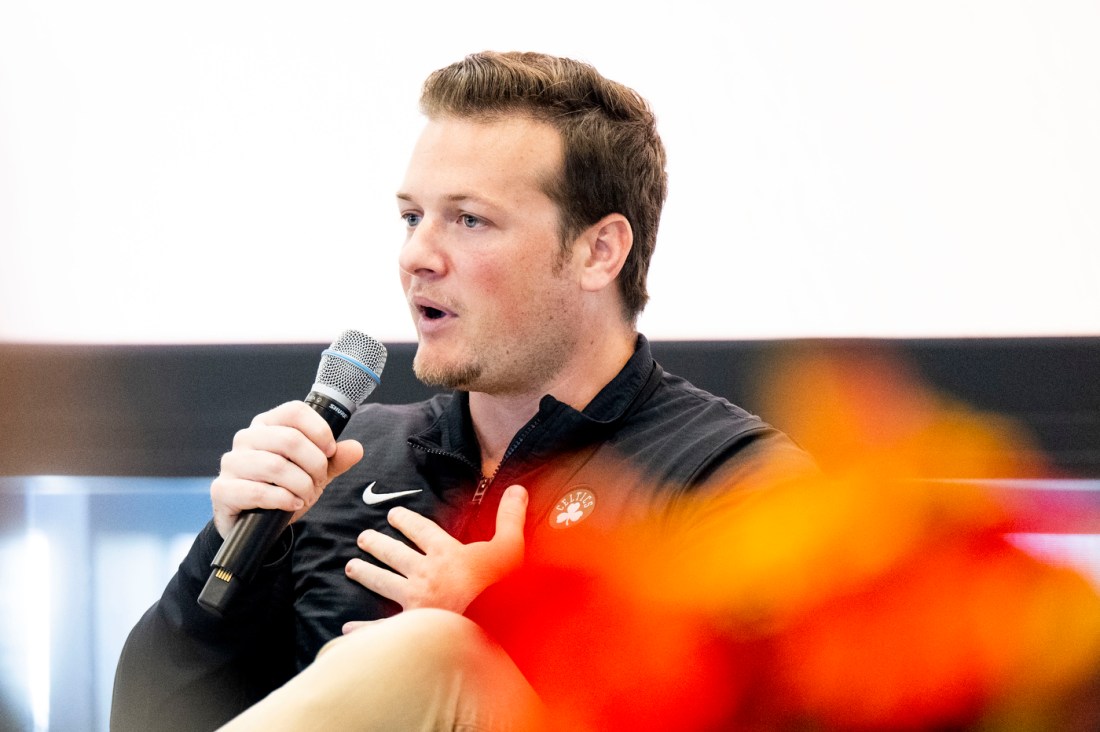

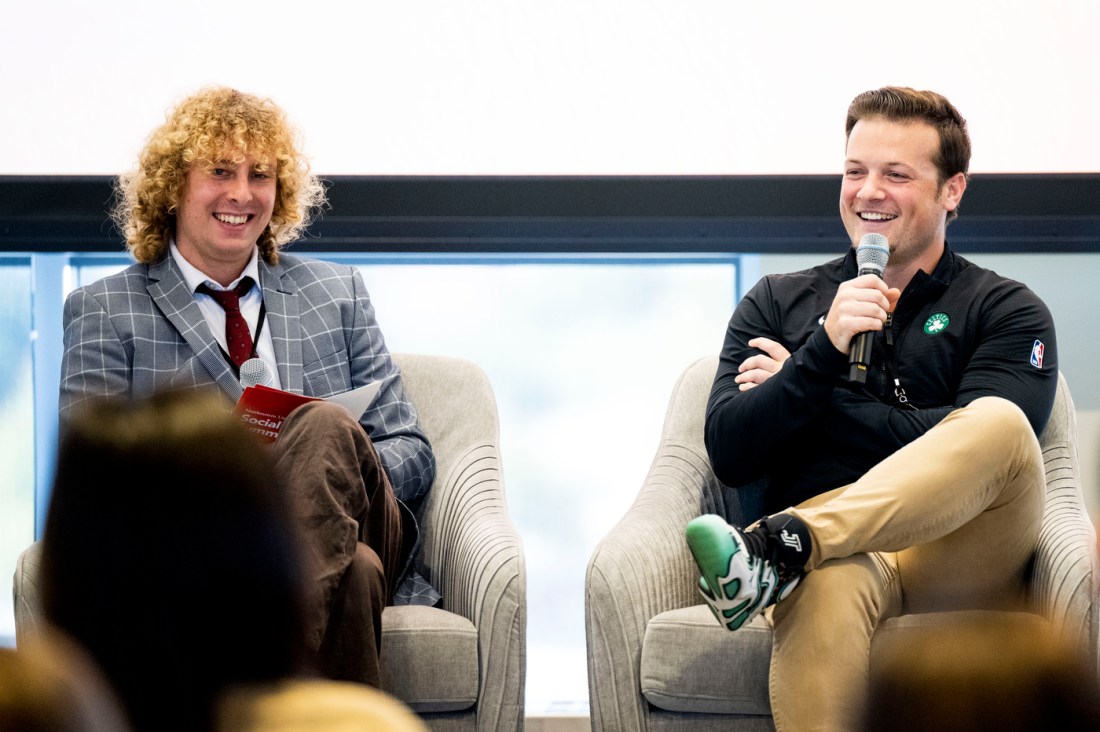
Senior Social Media Video Producer moderates a conversation with Mike Sivo, Sr. Manager, Social Media, The Boston Celtics, during the Speed and Agility panel during the Social Media Summit held in East Village 17th Floor event space on Oct. 21, 2025. Photo by Matthew Modoono/Northeastern University
Working in an environment as fast-paced and demanding as the NBA can certainly come with its challenges; one of the biggest ones is accommodating an ever-youthful fanbase and changing trends.
“It’s getting easier for us because these younger players — 19-, 20-year-old players — are joining teams on a year-to-year basis and have grown up with social media entirely,” he said. “Their entire childhood has been shaped and has evolved around how they use and consume social media.”
Catering to a global social audience
Running a social media operation can be overwhelming, especially given the vast number of social platforms corporations are expected to be active on — from TikTok and Instagram to X and BlueSky.
They also have to be global, connecting with billions of people around the world.
Jessica Fenerlis, the director of global social operations at SharkNinja — the kitchen and home appliance company — said in a panel discussion that her team develops a social strategy depending on the specific product they are looking to promote.
“So I think how we go to market with a lot of our different products, we really like to hone in on what is going to be the most value to the consumer for that product,” she said.
She highlighted one example when the company launched its Ninja Creami, its ice cream maker, in its French market.
Strong social media brand
In a lightning round discussion, Emily Schario, director of multimedia storytelling and head of content for The B-Side — The Boston Globe’s free daily newsletter and social media brand — shared how she built the brand from the ground up.

Social Media Specialist at Northeastern, Cameron Sleeper Senior Social Media Video Producer at Northeastern, Diogo Canas, Assistant Director of Digital & Social Media, New England Revolution, and Kristine Castoria, Sr. Sccial Media Specialist, Amtrak, speak during the How to Reach Gen Z panel in the Social Media Summit held in East Village 17th Floor event space on Oct. 21, 2025. Photo by Matthew Modoono/Northeastern University
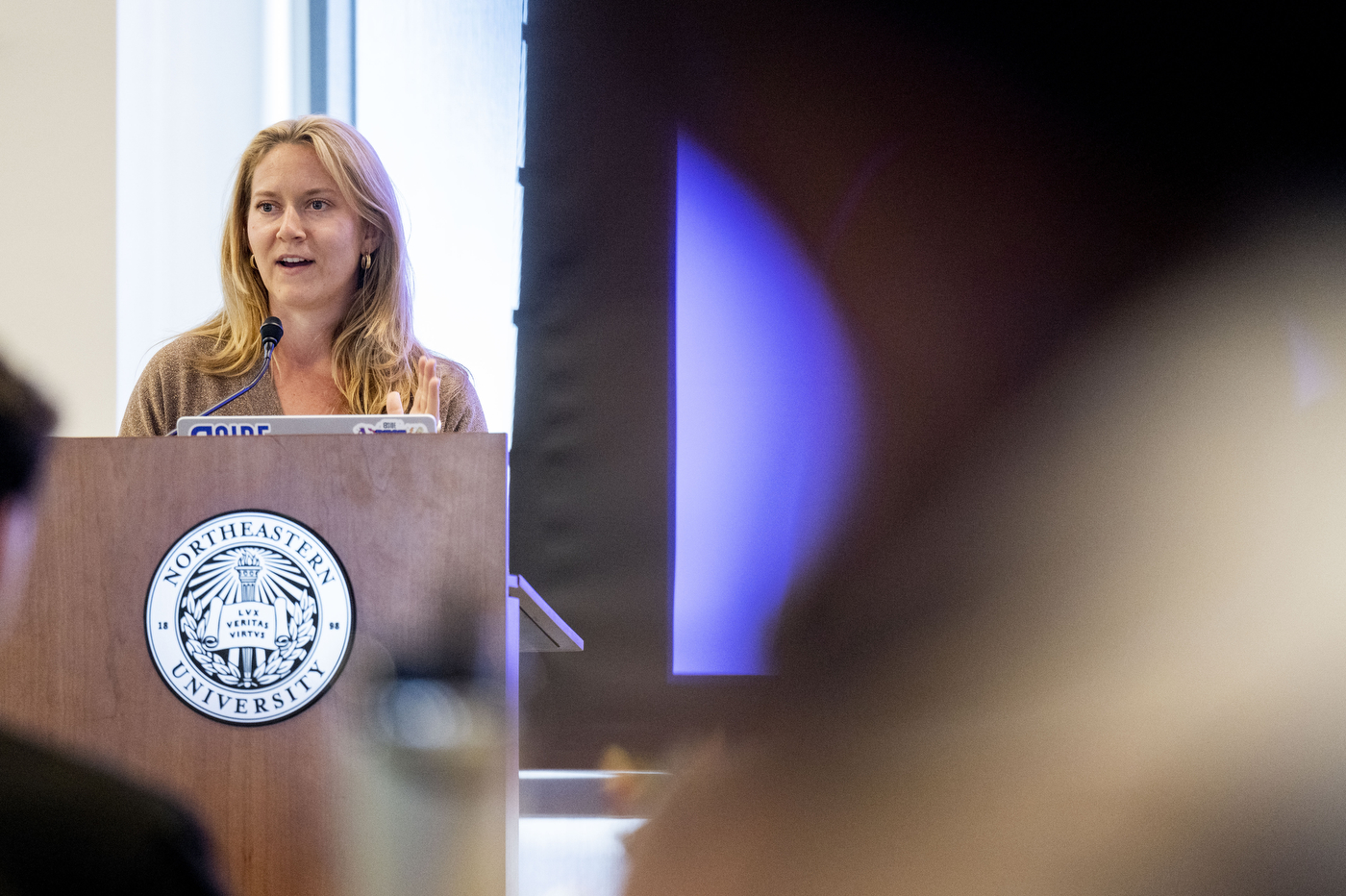

Social Media Specialist at Northeastern, Cameron Sleeper Senior Social Media Video Producer at Northeastern, Diogo Canas, Assistant Director of Digital & Social Media, New England Revolution, and Kristine Castoria, Sr. Sccial Media Specialist, Amtrak, speak during the How to Reach Gen Z panel in the Social Media Summit held in East Village 17th Floor event space on Oct. 21, 2025. Photo by Matthew Modoono/Northeastern University
The brand was built in 2021 to compete with trendy up-and-coming media brands like Axios, catering specifically to young people. The goal was to help address some key challenges in the news media ecosystem, including a few reliable local news sources and a broken 24/7 news cycle, Schario said.
Editor’s Picks





They made sure to target a specific audience, particularly young 20-somethings living in Boston, an important market the B-Side was looking to target.
“If you try to talk to everybody, you aren’t going to talk to anybody,” she said.
The newsletter — written in the style of a person talking to a friend — features stories meant to both inform and entertain readers, she said. And in the three years since its launch, it’s actually garnered a diverse audience of readers, including people in their 70s.
“Sure, the B-Side is designed for young people living in Boston, but when you have a product that is accessible and digestible, that is giving people a mixture of both lifestyle and local news that transcends age at the end of the day,” Schario said.
How to Reach Gen Z on Social
Gen Z continues to be a massive market for social media creators, and there are many ways to cater to them, explained a panel on attracting the young people that make up the generation.
Kristine Castoria, a social media specialist at AmTrack, said it’s important for brands to be authentic because Gen Zers can see through cheap statistics and dishonesty.
“Gen Z can spot fake a mile away,” added Diogo Canas, the assistant director of digital and social media at New England Revolution.
But they can also be a brand’s most loyal supporters, he said. “When Gen Z connects with your brand, they don’t just follow, they belong.”


