Archive of racial homicides expands, exposing history that’s ‘not easy to grapple with’


Sidney Batiste, a 17-year-old delivery boy, was killed by a white police officer in New Orleans on Aug. 3, 1953. The officer shot five other Black men during a five-year period, killing four in total.
Dorothy Godley, 13, was murdered on Nov. 9, 1941, in Rosharon, Texas, when her family turned the car around on an impassable road and a white man accused them of trespassing.
They are two of the more than 290 names recently added to the Burnham-Nobles Digital Archive of the Civil Rights and Restorative Justice (CRRJ) clinic at Northeastern University. The archive is one of the most comprehensive digital records of racial homicides in the Jim Crow South collected to date.
“This history is not easy to grapple with, but it is part — very much part — of American history,” says Margaret Burnham, university distinguished professor and director of the CRRJ. “So we do this, not only because for those who are affected and who are still alive it is of enormous importance, but we also do this as scholars. Our job is to lift up, render visible history — important histories.”
The CRRJ was launched in 2007 and offers graduate students in law, journalism, media studies and public history opportunities to investigate and document cases of racial homicides and work with communities to design restorative projects.
One of its major projects is the digital archive.
Named after Burnham and cofounder Melissa Nobles, a chancellor at MIT, the archive contains case files documenting African American victims of racial homicides that occurred between 1930 and 1954 in the Jim Crow South.
The archive was launched in 2022 with nearly 1,000 cases from former Confederate states.
This summer, the archive was expanded to include 275 new incidents in seven additional states — Maryland, Delaware, Indiana, Kentucky, Missouri, West Virginia and Oklahoma — and the District of Columbia.
“The idea was to widen the circumference to include these additional states in order to get, first of all, a better scope on the violence; but, as well, to give us some basis for comparing one state to another,” Burnham says.
The archive now catalogues 1,170 total incidents with 1,230 victims, and more than 12,000 records.
Many of the stories are heartbreaking.
Bob White, a 28-year-old Black laborer, was shot and killed on June 10, 1941, in a Conroe, Texas, courtroom where he was on his third trial for the alleged rape of a white woman. White’s first conviction and death sentence in the case was reversed on appeal; his second conviction and death sentence was reversed by the U.S. Supreme Court. During jury selection of his third trial, the woman’s husband shot and killed White. The husband was later acquitted by a jury.
But the CRRJ doesn’t just document tragedy and injustice. It also offers relatives and members of the communities to which the deceased belonged a chance to achieve what was often denied: justice and healing.
Editor’s Picks





While, for instance, Godley’s killer, C.V. Barnes, was convicted of murder and sentenced to prison; fewer than 75 of the archive’s cases have resulted in a conviction.
So, this Juneteenth, students with the CRRJ helped design and attended and participated in a commemorative event in Memphis, Tennessee, to memorialize the 1939 death of Philip Hatley — a 43-year-old mill worker and World War I veteran who was killed in his home by two off-duty, and allegedly drunk, police officers — and other victims of racialized police killings.
The event featured archival materials from Memphis cases; testimony from descendants of Hatley and more recent victims of police violence Edward Garner and Tyre Nichols; a letter-writing station; a visit to Hatley’s burial site; and a temporary memorial honoring victims of police violence past and present.
“The purpose of these research projects is to provide students with an opportunity to understand how justice miscarried during this period of time, and also to give them access to the families and communities most affected by the violence,” Burnham says. “One of our main focuses, in addition to the data collection, has been to both share the data and explore the meaning of the data with affected communities.”
Indeed, these commemorative events have been meaningful.
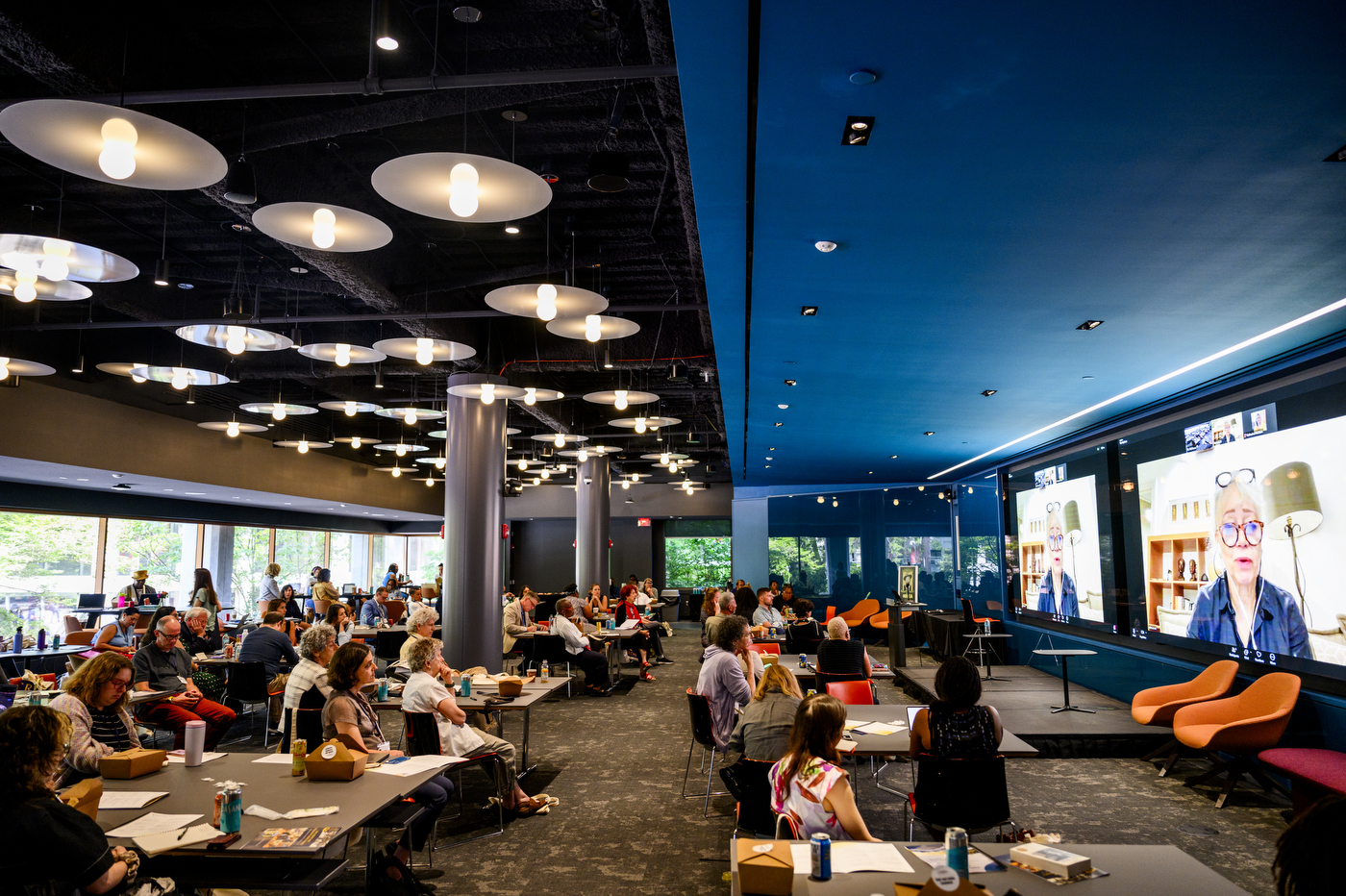
At a recent conference held at Northeastern, the audience screened a documentary about the 1948 lynching of WWII veteran Hosea Carter in Marion County, Mississippi, told from the perspective of the victim’s son, Jimmie Dell Carter.
Dell Carter attended the screening and was not alone in crying during the film, which narrated Dell Carter’s lifelong pursuit of justice for his father’s death at the hands of a group of men angered that Hosea Carter had talked to a white woman.
After a standing ovation for the film, Dell Carter credited Burnham, and the CRRJ and its staff with bringing new meaning to his life.
“I’m getting closure,” Dell Carter said, choking back tears. “I want to thank each and every one who listened to the story, and I hope my story and my father’s story will keep going and be told.”


